The Vacuum Program That Saved Us Thousands Every Year
For the first eleven years of running Dust and Mop House Cleaning, we supplied every cleaning pro with a company vacuum. We bought them, we maintained them, we repaired them.
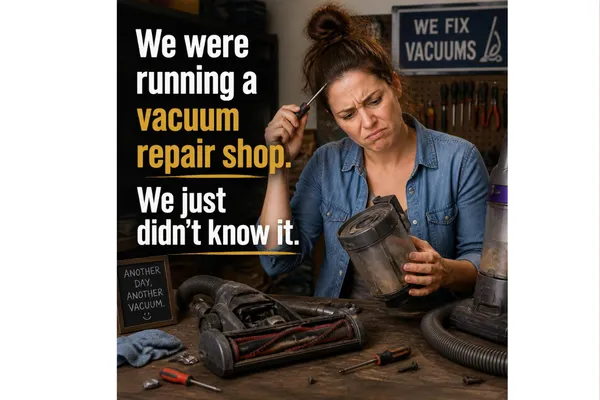
And somewhere along the way, without really noticing it, we had turned part of our house cleaning business into a vacuum repair shop.
Vacuums were coming back broken. Filters weren't being cleaned. Belts were snapping. Brush rolls were clogged. We were spending money we couldn't easily track — not just on parts and replacements, but on the time it took to deal with all of it. Every house cleaning business owner knows that the real cost of a broken vacuum isn't just the vacuum. It's the job that gets delayed, the cleaning pro who can't work, the customer who notices.
The problem wasn't the vacuums. The problem was ownership.
The Problem With Company-Owned Equipment
When something belongs to the company, nobody treats it the way they'd treat their own. That's not a character flaw — it's just human nature. A cleaning pro who owns her vacuum cleans the filter because she knows what happens if she doesn't. A cleaning pro using a company vacuum figures someone else will deal with it.
We were running from 2009 to 2020 on the company-supplied model. By the end, we were spending thousands of dollars a year on vacuums — purchases, repairs, replacements. And the mental load of managing equipment that your team doesn't value the way you do is its own cost that never shows up on a spreadsheet.
In 2020, we changed the model.
How We Made the Transition
At Dust and Mop House Cleaning, we sent a memo to the entire team. The message was straightforward: going forward, every cleaning pro is responsible for having a vacuum in their vehicle. You own it. You maintain it. You make sure it works.
For the cleaning pros who already had company-issued vacuums, we didn't take them back. They were good vacuums — well-built, and if cared for properly, the kind that last a long time. We let them keep them, free of charge. But we were clear: we would not be replacing those vacuums. If they needed help with a repair, they could stop into the office and we'd help them figure it out. The responsibility had shifted.
Options for Cleaning Pros Who Need a New Vacuum
1. Purchase your own approved vacuum. As long as it meets our requirements and passes inspection, it's approved. This is the most common path.
2. Company-assisted purchase. We will buy a vacuum on your behalf — up to $250 — and deduct $20 per week from your paycheck until it's paid off. If you leave before it's paid off, the remaining balance is your responsibility.
3. Loaner vacuum. We keep one or two loaners at the office for emergencies. It must be returned by end of day. Honestly? Almost nobody ever uses this option. When it's your vacuum and your responsibility, you figure it out.
What We Require in an Approved Vacuum
Not every vacuum works for professional house cleaning. We learned that the hard way. So when we made the shift, we put together a clear list of what an approved vacuum has to have.
It has to work on both hard floors and carpet. It has to have a rotating brush bar — and the cleaning pro needs to know how to use it properly so it doesn't scratch hardwood floors. It needs smooth-gliding wheels, not hard plastic that drags across floors. It needs a large-capacity dirt tank — no stick vacuums, they don't have the power or the capacity for professional work. It needs a detachable wand for attachments. And it needs at minimum a crevice tool and a carpet and upholstery attachment for stairs and furniture.
Every vacuum gets inspected before it's used in a customer's home. That's not negotiable.
What Changed
The vacuum problems didn't go away completely — nothing ever does. But they became the cleaning pro's problem to solve, not ours. The repair calls stopped. The replacement purchases stopped. The time we were spending managing vacuum inventory and coordinating repairs went to zero.
We haven't had a vacuum expense since 2020. Every house cleaning business owner who has dealt with this knows exactly what I'm talking about — it's not just the money, it's the mental load of managing equipment that your team doesn't value the way you do.
Shifting ownership shifted everything.
If You're Still Supplying Vacuums
I'm not saying this is the right move for every house cleaning business at every stage. When you're small and just getting started, supplying equipment makes sense. But if you're running a team of cleaning pros and you're spending real time and money on vacuum maintenance and replacement, it's worth asking whether the model is working.
The transition doesn't have to be abrupt. We gave our existing team their vacuums. We gave everyone options for how to get an approved one. We made it fair. And it worked.
The vacuum program is one of those operational decisions that sounds small but compounds over time. Less money out the door. Less time managing equipment. Cleaning pros who take better care of their tools because those tools belong to them.
That's the kind of system that makes a house cleaning business easier to run — and easier to scale.
A Quick Note on State Laws
Before implementing a payroll deduction arrangement, check your state and local wage laws — some states restrict or prohibit deductions from employee paychecks. That said, even if payroll deduction isn't permitted in your state, this program is still worth running. Most vacuums get paid off well before someone leaves. And if a cleaning pro leaves with a balance remaining, the agreement gives you a clear basis to ask for the vacuum back. The program works either way.
Disclaimer: The information in this post is provided for educational purposes only and does not constitute legal, financial, or employment advice. Gojambee is not a law firm, accounting firm, or HR consultancy. Always consult a qualified attorney or HR professional and review applicable state and local laws before implementing any policy or agreement in your business.