What's Your Policy When Something Breaks in a Customer's Home?
Every house cleaning business owner faces this moment eventually.
Your cleaning pro is doing their job. Rinsing down a shower, wiping a handle, moving a blind to clean behind it. And something breaks. Not because they were careless. Not because they did anything wrong. It broke because it was already worn, already loose, already on its way out. Your team just happened to be the one touching it when it finally gave.
Now what?
If you don't have a written policy, you're about to have a very uncomfortable conversation with a customer. And you're probably going to end up paying for something that wasn't your fault just to keep the peace. I know because I did it for years.
After 17 years running Dust and Mop House Cleaning, a company that now generates over $4 million annually, one of the best decisions I ever made was writing a clear, specific policy around damages and wear and tear. Not just for the customers. For my team too.
The Difference Between Damage and Wear and Tear
This is the distinction most house cleaning business owners never make, and it costs them money.
Damage is when your team does something wrong. They knock a vase off a shelf, use the wrong product on a surface, or scratch something through negligence. That's on you. That's what your insurance is for.
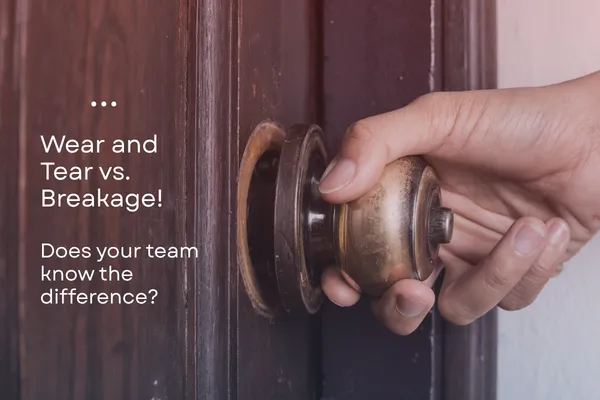
Wear and tear is different. A handle that breaks because it was already corroded. A blind that snaps because the mechanism was already failing. A faucet that comes off in your cleaning pro's hand because it was never properly installed. These are not damages caused by your team. These are the natural consequences of a home that has been lived in.
Treating these two things the same way is one of the most common and costly mistakes I see in the house cleaning industry.
How We Handle It at Dust and Mop
We break our policy into three clear categories, and every customer sees this in their terms and conditions before they ever book with us.
Our Three-Category Policy
1. Normal wear and tear. We are not responsible for items that break during normal usage, are installed improperly, or are not properly secured. Handles, faucets, blinds. If it breaks because it was already failing, that is not our liability.
2. Incidental damage under $200. For small items knocked off a shelf during dusting, we provide a credit toward future services. This keeps customers happy without opening the door to unlimited liability.
3. Negligence or malpractice. If our team genuinely causes damage through carelessness or improper technique, that is handled by our insurance provider. We take that seriously and we stand behind it.
The Policy That Changed Our Team Culture
One of the most important things we added, and the one most people never talk about, is our no-punishment policy for breakage.
Our cleaning pros are never punished for reporting a break. Never. Not even for accidental damage.
Before we had this policy, breakage got hidden. A cleaning pro would knock something over, panic, and say nothing. By the time the customer noticed, we had no idea what happened or when. Now, because our team knows they won't be punished for reporting it, we find out immediately. We can address it with the customer right away, before it becomes a complaint or a review.
That one policy change transformed how honest our team is and how much our customers trust us.
Why This Matters for Your House Cleaning Business
If you're building a professional house cleaning company, one that scales and operates with real systems and standards, you need this in writing.
Not because you're trying to avoid responsibility. Because you're running a real business, not a favor service. Clear policies protect your cleaning pros from feeling guilty about things that aren't their fault. They protect your bottom line from absorbing costs that aren't yours to absorb. And they set expectations with customers upfront, which means fewer disputes and better relationships.
The house cleaning business owners I work with who have the strongest operations are the ones who stopped making it up as they go and started documenting how their business actually works.